
South India
Karnataka
Hinduism
Kollur Mookambika Temple, Kollur
Riverine Rhythms
Living Traditions
Set where the Western Ghats soften into river valleys, Kollur Mookambika Temple is shaped as much by flowing water as by prayer. Pilgrims arrive through forested roads, bathe in the Souparnika, and step into a shrine whose rhythm is defined by everyday rituals, student blessings, and generations of return visits.
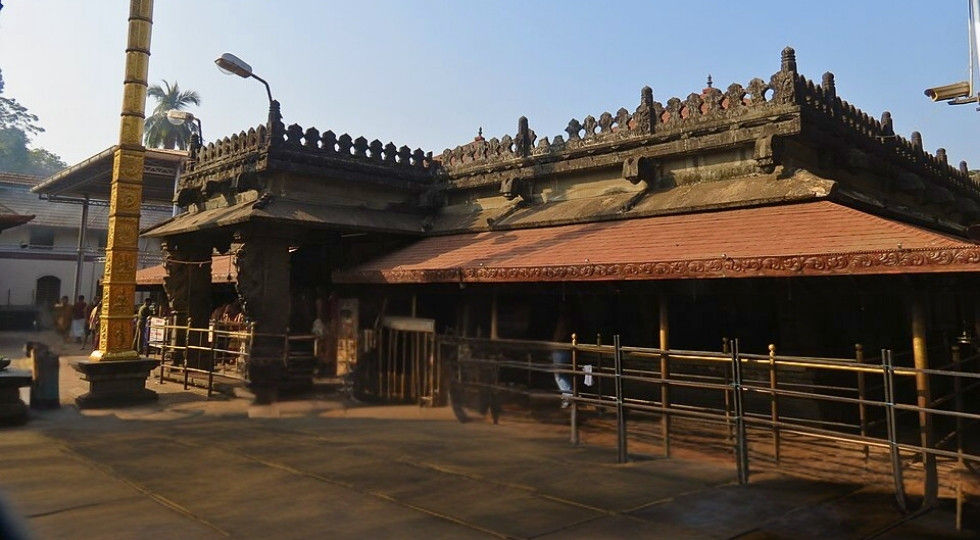
Photo: By Yogesa / Wikimedia Commons / CC BY-SA 3.0
THE ESSENCE
The Healing Flow
Kollur feels tucked away, even when it’s busy. The town sits at the edge of the Western Ghats, where hills give way to river flats and the air carries a mix of forest dampness and incense. The presence of the Souparnika River is immediate—heard before it’s seen, and woven into how devotees begin their visit.
The temple is dedicated to Mookambika, a form of the goddess associated with knowledge and creative energy. For many families across Karnataka and Kerala, this is a place you come back to repeatedly through life: a child’s first rice ceremony, a student’s Vidyarambham (initiation into learning), quiet personal vows, and annual festival visits. These aren’t one-time pilgrimages; they’re chapters in a long devotional relationship.
What makes Mookambika a Living Traditions shrine is not scale or spectacle—it’s continuity. Locals structure their days around temple timings. Visiting families know exactly where to bathe by the river, where to queue, and which offerings to carry. Priests move through familiar sequences of Chandika and Saraswati worship, while devotees wait with notebooks, slates, or simply folded hands.
Unlike Pilgrim’s Path sites, Kollur does not ask for physical endurance or prescribed routes. The ritual happens at the destination. You arrive, cleanse at the river, enter the temple, complete your prayers, and return—often to repeat the same cycle years later. The power here lies in return, not traversal.
Geographically, Kollur sits at a gentle intersection: river, forest, and foothill. The temple complex feels grounded rather than monumental, and the surrounding town retains a small, devotional pace. Even on crowded days, there’s an underlying calm—people come with purpose, complete their rituals, and move on quietly.
THE CURIO
The Golden Line (Swarna Rekha): The main deity is a Jyotirlinga (self-manifested) with a golden line dividing it. The left half represents the Tridevi (Lakshmi, Saraswati, Shakti) and the right half represents the Trimurti, symbolising the ultimate cosmic balance.
The Anti-Gravity Pushkarini: Local legends and recent observations mention a temple pond where water appears to move in mysterious ways, adding to the site's "Mystical Archive."
The Saraswati Connection: The temple is a primary hub for Vidyarambham (the ritual start of education for children), as the Goddess is worshipped here as the source of all knowledge and speech.
ANCIENT ROOTS
The Shankara Legacy
The temple is inextricably linked to Adi Shankaracharya, who is believed to have installed the metal icon of the Goddess about 1,200 years ago. Historically, the site has been patronised by the Keladi Nayakas and the Vijayanagara kings. It serves as a vital archive of South Indian religious history, blending the ritual traditions of Kerala with the architectural styles of Karnataka (Dravidian and Hoysala).
THE JOURNEY THERE
Town: Kollur
By Air: Mangalore International Airport (IXE) is the nearest hub, about 130km away.
By Rail: Byndoor (Mookambika Road) is the closest railway station (28km) or Kundapura (approx. 35–40km) is an option.
The Drive: The journey involves a beautiful, winding drive through the Mookambika Wildlife Sanctuary, where the "River Rhythm" often merges with sightings of the Western Ghats' diverse fauna.
SACRED RHYTHMS
Navaratri: The ten-day autumn festival is the peak of the temple’s "Living Tradition," ending with the mass Vidyarambham on Vijayadashami.
Rathotsava: The grand chariot festival in March/April, when the deity is taken in procession through the forest-fringed streets.
Daily Chandika and Saraswati worship: Forms the backbone of everyday devotion.
Festival days transform the town; outside these windows, Kollur feels measured and local.
Local tip: Early mornings are best—river bathing is calmer, and darshan queues move faster.
REST & RETREAT
Stay at the temple-run guest houses for a close connection to the morning rituals. For a more nature-focused stay, look for eco-resorts and forest camps near the Souparnika River that offer a quiet "Forest Sanctuary" experience.
For more comfort, some visitors stay in Kundapura or along the coastal belt and travel in for darshan. However, staying nearby helps align with early river rituals.
PRACTICAL TIPS
Dress Code: Men must remove shirts and vests before entering the inner sanctum; women should wear traditional Indian attire. Bring a change if bathing in the river.
The River Path: The path to the Souparnika can be slippery, especially during the monsoon (June–September); use caution.
Footwear: Remove before temple entry—carry a small pouch for valuables.
Ritual timing: If visiting for Vidyarambham or special pujas, enquire locally about schedules. It is best to book in advance during the festival season.
Photography: Restricted inside; follow posted rules.
Time required: 60–90 minutes for a standard visit; longer during festivals.
THE NEIGHBOURHOOD
Trek to the Kodachadri Peak (1,343m), where Adi Shankara is said to have meditated. The Arasinagundi Falls, deep within the forest, is another spectacular "River Rhythm" spot accessible by a forest trek.