
North India
Jammu & Kashmir
Hinduism
Martand Sun Temple Ruins, Anantnag
Mountain Echoes
Architectural Marvel, Historic Legacy
Set on a high plateau overlooking the Kashmir Valley, the Martand Sun Temple is a ruin of uncommon scale and dignity. Wind, sky, and distant mountains frame what remains of a once-grand sun temple—today a place where architecture, silence, and landscape carry the meaning forward.
THE ESSENCE
The Colonnade of Clouds
At Martand, the "Mountain Echo" is felt in the vastness of the sky and the sharp, cold air of the plateau. Even in its ruined state, the temple commands the landscape. The approach to Martand is part of the experience. You leave the bustle of Anantnag and rise toward an open, elevated plateau. The valley drops away behind you; the horizon opens. Even before the ruins appear, the setting signals that this was never meant to be a modest shrine.
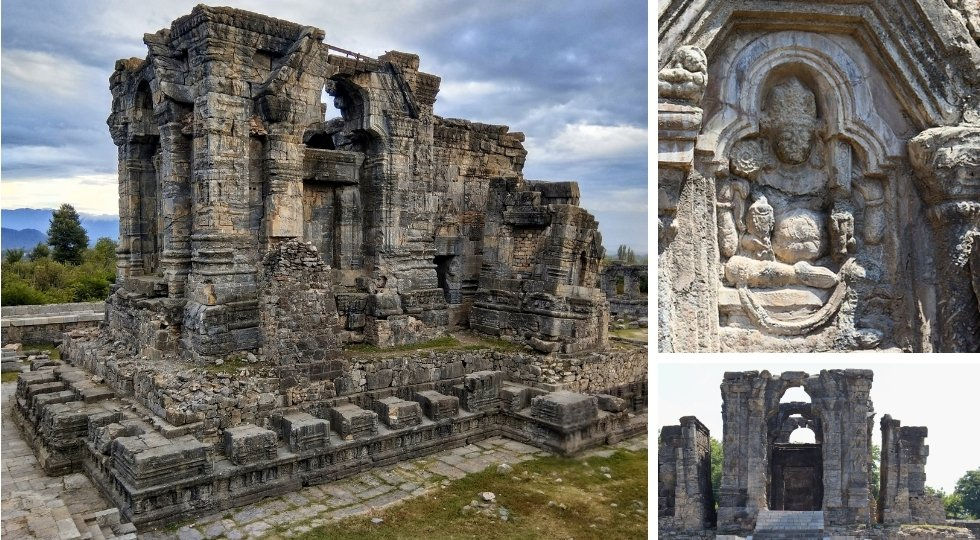
What survives today—rows of colonnades, a vast courtyard, and the core sanctum—suggests a confident architectural vision that blended Kashmir’s own temple idiom with influences from Gandhara and the wider trans-Himalayan world.
Walking through the ruins, you sense proportion first. The courtyard is expansive, the pillars widely spaced, the central shrine elevated. There is no crowd-management choreography here, no tight ritual flow. Instead, the site invites slow movement and long pauses. The stone is weathered, but the geometry still holds.
Martand’s significance today lies less in active ritual and more in civilisational memory. It represents a period when Kashmir was a major cultural and political centre, connected by ideas and trade across mountain routes. The sun deity worshipped here—Surya—was not peripheral; this was a state-sponsored, cosmically oriented shrine meant to be seen, approached, and remembered.
The temple was designed to capture the sun's rays from dawn to dusk. Standing within the central sanctum, looking out through the arches at the snow-capped peaks, there is a sense of "Stillness" that is both ancient and cinematic.
For SacredRoutesIndia, Martand sits comfortably in the “Mountain Echoes” rhythm. The altitude, exposure, and open sky shape the visit. The silence is not emptiness; it’s a reminder that some sacred places endure through presence rather than practice.
THE CURIO
Architectural Syncretism: Martand is a rare archive of global influences. Notice the Greek-style fluted columns, the Roman-inspired pediments, and the Gandharan-influenced Buddhist motifs, all integrated into a traditional Hindu temple plan.
The 84 Pillars: The courtyard is enclosed by a peristyle with 84 small shrines, a number sacred in Hindu solar geometry, representing the days of the week multiplied by the twelve months.
The "Martand" Etymology: The name is derived from the Sanskrit word for the Sun (Martand). Local lore suggests the temple was built on the spot where the Sun God was born to Aditi.
ANCIENT ROOTS
Commissioned by the great King Lalitaditya Muktapida of the Karkota Dynasty in the 8th Century CE, Martand was the largest temple in Kashmir and a symbol of the empire's peak power. Historically, it was a major centre of learning and worship until it was destroyed in the early 15th century under the orders of Sultan Sikandar Butshikan. Today, it is a protected monument under the ASI, serving as a primary archive for the study of medieval Kashmiri architecture.
THE JOURNEY THERE
Martand is located about 64km from Srinagar, near the town of Mattan.
By Air: Srinagar International Airport (SXR) is the nearest hub.
By Rail: The Srinagar-Banihal railway line serves the region, with the Anantnag station being the closest.
Nearest Town: Anantnag (approx. 9–10 km)
The Approach: The drive from Srinagar through the saffron fields of Pampore leads you to the high plateau of Keharbal, where the temple ruins suddenly emerge against the horizon. The site is accessible by road from Anantnag; the final approach opens onto a plateau with basic parking nearby.
SACRED RHYTHMS
Martand is not a living festival site today. There are no regular large-scale rituals or annual fairs associated with the ruins. That said, occasional heritage walks and scholarly visits bring renewed attention to the site, especially during the summer travel season.
Solar Alignments: The site is at its most potent during the Equinoxes, when the alignment of the sun with the central axis of the temple becomes apparent.
For visitors seeking quiet reflection, most days outside peak tourist months offer an unhurried experience.
REST & RETREAT
Martand is best visited as a half-day excursion from:
Anantnag: Practical base with basic hotels
Srinagar: Wider accommodation range and easier flight access
Staying in Anantnag allows for early or late visits when the plateau feels most open and calm.
PRACTICAL TIPS
Footwear: Wear comfortable shoes; paths are uneven and surfaces can be slippery in wet weather.
Timing: Sunrise to Sunset. The "Golden Hour" shortly before sunset is the best time for photography, as the limestone glows amber.
Security: The site is under the protection of the ASI and security personnel are present. Standard security protocols for the Kashmir Valley apply.
Photography: Excellent for architectural photography; however, be mindful that the site is a ruin—do not climb on the fragile structures.
Weather awareness: Wind and sun exposure are strong—carry water and protection. Weather can shift quickly even on clear days.
Time required: 45–75 minutes is sufficient for a thoughtful walk-through.
THE NEIGHBOURHOOD
Visit the nearby Mattan Temple, an active shrine with a sacred fish pond, or explore the Aisumuqam Shrine, located on the way to Pahalgam. The ancient site of Avantipur also offers another spectacular set of 9th-century temple ruins.